
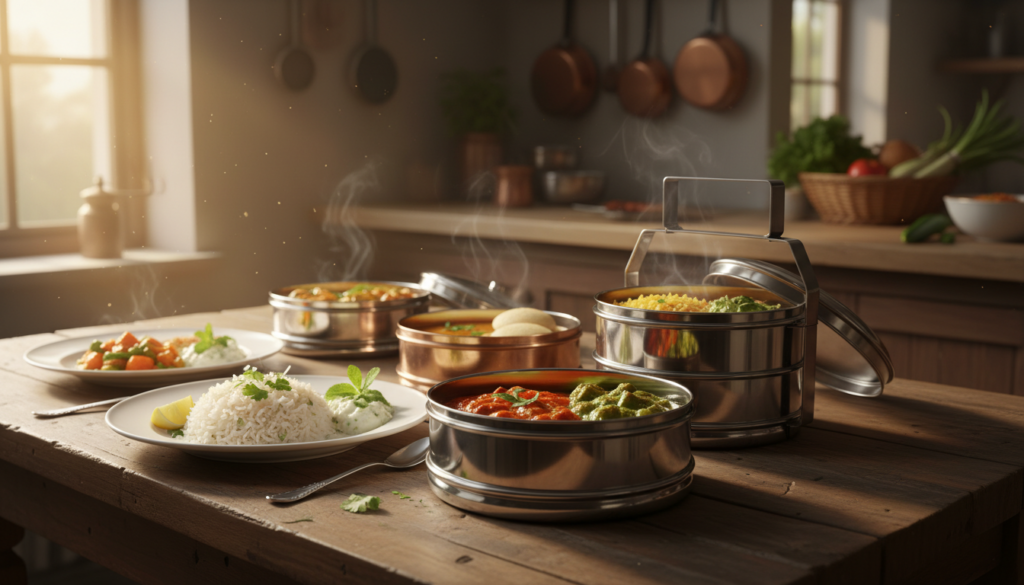
One in three Sydneysiders who cook less often say they’d choose daily home-style meals if they were affordable and reliable.
This page is for students on a budget, busy professionals and families who want fresh, home-cooked meals without the after-work fuss. It spotlights a local solution that delivers veg and non-veg options across suburbs such as Harris Park and Parramatta.
Readers will see what a typical box contains, how ordering and delivery work, and what to expect on price and menu variety. Social proof matters: customers praise the food as “really tasty homemade food and good service”, note it’s “home made and healthy”, and single out soft rotis for applause.
Why choose a tiffin over daily takeaway? It’s cheaper, steadier and built for routine. Compare meal plans, check delivery areas and pick a provider that matches diet and schedule to get started today.
Key Takeaways
- Daily home-style meals suit students, workers and families across Sydney.
- Look for freshness, authentic taste, menu variety and reliable delivery.
- Expect veg and non-veg options and clear pricing for suburbs like Parramatta.
- Customer reviews highlight tasty, healthy food and standout rotis.
- Compare plans and check delivery areas to pick the right provider.
Indian Tiffin Service Sydney locals rely on for fresh, home-style food
For anyone juggling study, shifts or family life, a scheduled home-style meal delivery removes the nightly rush. It delivers a pre-portioned box, often thali-style, prepared fresh and dropped on a set schedule for lunch or dinner.
What comes in the box? Typically a main curry, a dal or lentil, a staple like rice or roti, and small sides such as salad, pickle or raita. This simple format keeps meals balanced and easy to reheat.
Why locals choose this option: It saves time on shopping, cooking and cleanup while keeping the warm, familiar taste of homemade indian food. Students like the predictable cost and filling portions. Workers value reliable timing and ready-to-eat dinners. Families appreciate consistent quality and the ability to request milder spice or lower oil.
“Homely cooked, authentic way and utmost care of hygiene” — a customer review reflecting why many trust these providers.
| Box Type | Common Contents | Good for |
|---|---|---|
| Veg Thali | Main veg curry, dal, rice, roti, salad | Veg households, variety seekers |
| Mixed Non-Veg Thali | Chicken or fish curry, dal, rice, roti, side | Workers, families wanting protein |
| Custom Plan | Choice of spice level, oil, portion size | Families with kids, dietary preferences |
Providers emphasise authentic indian flavours and rotating menus so meals feel fresh each week. Many also highlight hygiene and easy ordering, making the offering a practical, affordable alternative to nightly takeaway apps.
What’s included in a typical tiffin meal in Sydney
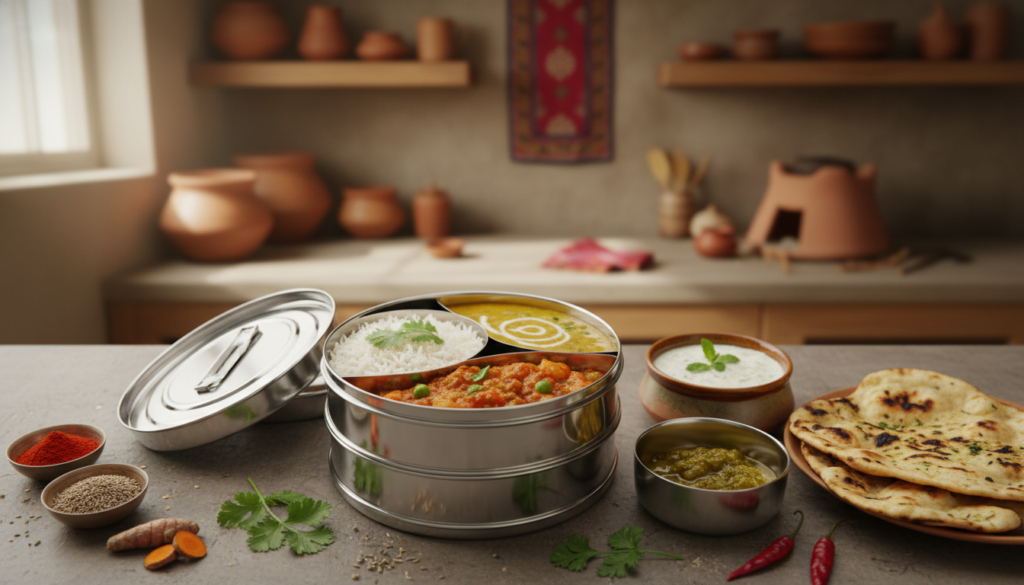
A typical Sydney lunch box packs a full, balanced meal that feels like a home-cooked dinner. Providers usually deliver freshly made boxes on a daily or weekly schedule so meals stay consistent and easy to reheat.
Core plate components
Mains and lentils: Most boxes include two different curries plus a dal. Common dal choices are moong dal, dal tadka, dal makhani and dal fry. These lentil dishes are comfort food for many and fuel daily routines.
Rice, breads and sides
Rice options often rotate between basmati rice and jeera rice, with occasional fried rice or spiced variations. Bread can be simple chapatis, missi roti or puri on special days. Salad, pickle and raita (boondi raita or carrot raita) round out the meal for balance.
Dessert and menu variety
Rotating desserts include kheer, gulab jamun, ras malai and halwa such as moong dal halwa. Popular dishes customers look for are palak paneer, paneer butter masala, dal tadka and dal makhani. Many providers offer vegetarian thalis and some add non-veg options on selected days.
| Component | Typical Options | Why it matters |
|---|---|---|
| Main curries | Palak paneer, paneer butter masala, mix veg | Variety and familiar flavours |
| Dal | Moong dal, dal tadka, dal makhani, dal fry | Comfort, protein and daily staple |
| Rice & bread | Basmati rice, jeera rice, fried rice, chapatis, missi roti, puri | Starch choices keep weeks interesting |
| Sides & dessert | Salad, pickle, boondi raita, kheer, gulab jamun, moong dal halwa | Freshness, spice balance and sweet finish |
How Sydney tiffin services work: ordering, delivery frequency, and meal plans
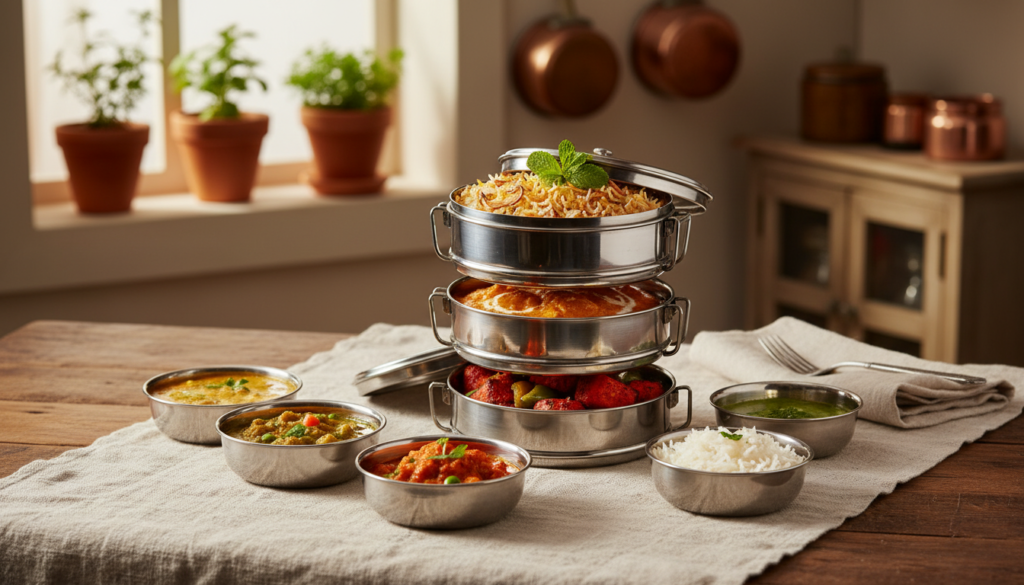
A simple sign-up, clear menu updates and fixed delivery windows make daily meals effortless. Customers usually pick a plan, confirm dietary notes and then receive quick confirmations and daily alerts.
Ordering and customer communication
Most providers use WhatsApp-style broadcasts or SMS so the order process is fast and traceable. For example, India Catering accepts messages at +61425728840 and sends weekly menus, then confirms daily items.
Delivery frequency and plan types
Choices include weekdays-only, daily or selected days each week. Plans run daily, weekly or monthly so students and professionals can pick a routine that suits them.
Pickup vs delivery and flexibility
Pickup (typical 12:00–19:00) is often cheaper. Delivery (usually 12:30–19:00 area-dependent) adds convenience. Core meals and rotating menus stay the same either way.
Dietary needs, pausing and portions
Providers adjust spice level, oil and special requests — customers note personalised menus and easy communication. Pauses need notice before cut-off; billing or credits depend on the plan. Portions are single-person by default; family packs are available as an option.
| Question | Answer |
|---|---|
| How to pause? | Contact provider before cut-off; pause applies per plan rules. |
| Portion size? | Standard single meal; add-ons for larger appetites. |
| Pickup vs delivery cost? | Pickup usually cheaper; delivery adds a small fee. |
Pricing expectations for tiffin service in Sydney and what affects cost
Knowing what affects price helps Sydneysiders pick a reliable weekly dinner option. A common benchmark in Sydney is a veg thali at $15 pickup / $18 delivery, which often includes multiple curries, dal, rice, bread and a side or dessert.
Typical price ranges and inclusions
Many plans sit around the $15–$20 mark for a single meal. Higher prices usually mean extra dishes, premium mains or dessert included. Weekly plans can lower the per-meal cost compared with ad-hoc orders.
Delivery fees and suburb distance
Delivery drivers set fees by distance, route density and delivery windows. Remote suburbs or small batch routes may add a surcharge. Always check the final delivery fee before you confirm.
Value comparison with takeaway apps
Tiffins are priced for full dinners, so they avoid the add-ons and surge fees common on apps. That leads to steadier costs and less food waste.
“very affordable price” — Ms. Niharicca Bokil
Tip: Compare inclusions (number of dishes, breads, dessert frequency and delivery rules) rather than headline price alone to judge real value.
Where Indian tiffin services deliver in Sydney: suburb examples and local convenience
Local routes now mean many households can get reliable evening meals during the working week. Providers focus on hubs where demand is highest and routes are efficient.
High-demand suburbs
Harris Park and Parramatta top the list. These areas have dense populations who value routine, variety and authentic indian cuisine.
Other common coverage areas
Auburn and Wentworthville often appear on daily rounds. Availability varies by provider and by route, so nearby streets can have different days for drops.
What to check for your address
- Delivery windows: confirm times (example: 12:30 PM–7:00 PM for delivery; pickup 12:00 PM–7:00 PM).
- Cut-off times: know the last order time for the next day.
- Coverage radius: ask if they deliver to apartments and if minimum orders apply.
“Relief to come home from work and not cook.”
Why choose this over apps? A scheduled service gives consistent taste india, balanced curries and salads, less waste and a steadier weeknight dinner experience. Ask for a sample menu or a trial week to test variety, spice and punctuality.
Conclusion
A clear decision guide helps anyone looking for steady, home-style meals that fit busy Sydney routines.
Why choose a tiffin service? It offers consistent, freshly made boxes with authentic indian flavour, affordability and veg/non-veg options. Reviewers call the food “healthy and very delicious” (Ms. Shradha Singh) and praise the “wide range of variety” (Mr. Mitesh Shah).
How to decide: check the current menu, confirm veg or mix veg options, ask about delivery windows and cut-offs, verify spice/oil customisation, and learn pause rules for your plan.
Tips: prioritise rotating dishes like curry, moong dal, gujarati dal, dal fry, basmati rice, jeera rice, salad and boondi raita to keep meals satisfying across the week.
Many providers accommodate needs—“accommodating different needs and requirements” (Mrs. Monita Nayak). Try a trial week (example pricing: $15 pickup / $18 delivery) in Harris Park, Parramatta, Auburn or Wentworthville, then place an order for a longer plan if the experience suits.
Leave a Reply